About
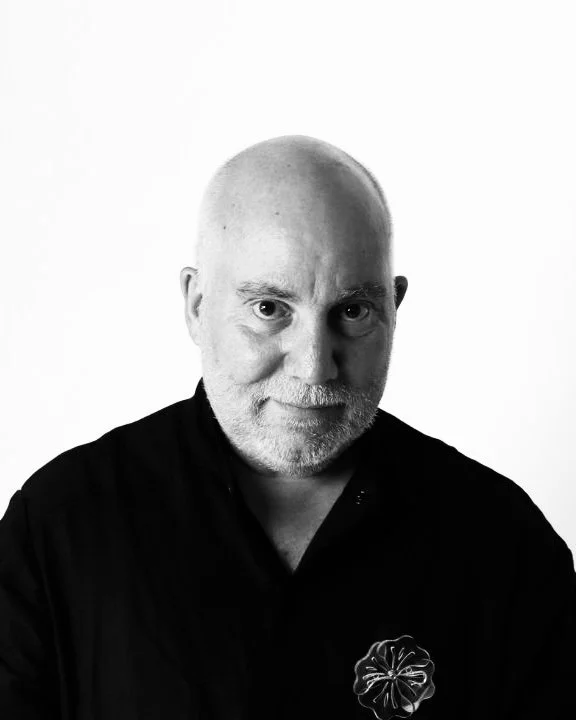
Imel Sierra Cabrera (Barceloneta, Puerto Rico, 1967) is an architect, sculptor, and public artist whose work bridges spatial design, material experimentation, and contemporary visual culture. He holds a Master’s Degree in Architecture from the University of Puerto Rico, where his 1994 thesis received the distinction of Thesis of the Year. His studies also include academic work in Madrid and Venice, expanding his architectural perspective into broader cultural and urban contexts.
Sierra began his professional career working with architecture and urban-design firms in Puerto Rico and Miami, contributing notably to the development of Puerto Rico’s mass-transit system, Tren Urbano, between 1996 and 1998.
From 1998 to 2024, he served as Professor of Architecture at the Polytechnic University of Puerto Rico, teaching beginning design, advanced studio, and thesis. Over more than two decades, he mentored new generations of architects, integrating conceptual approaches to space, structure, and materiality grounded in his own artistic practice.
A multiple awardee of Puerto Rico’s Arte Público competitions, Sierra has produced several landmark public artworks across the island. His winning projects include PALOMA and PLATANAL (1999), as well as AEDES and BLOB (2003). His sculpture Aëdes, installed along Expreso 22 in Arecibo, was restored in 2024 after being impacted by Hurricane María. He has also completed numerous municipal and private commissions throughout Puerto Rico, including sculptural installations for the Municipality of Salinas.
His work has been featured internationally, with participation in Muestra Nacional 09 (Puerto Rico), TRAIL in Devon, England (2010, 2012), GZ Basel (2012), and Sculpture by the Sea in Australia (2012–2013), as well as exhibitions in New York, Miami, and Puerto Rico. His project Las Salinas de Salinas was included in a 2011 publication in China, further extending his global presence.
Across his practice, Sierra explores the relationship between content and context, linking ideas and materials that appear unrelated and revealing poetic or paradoxical connections. His public artworks emphasize the experience of the urban passerby, integrating scale, form, texture, color, sound, and movement as essential components of place-making.